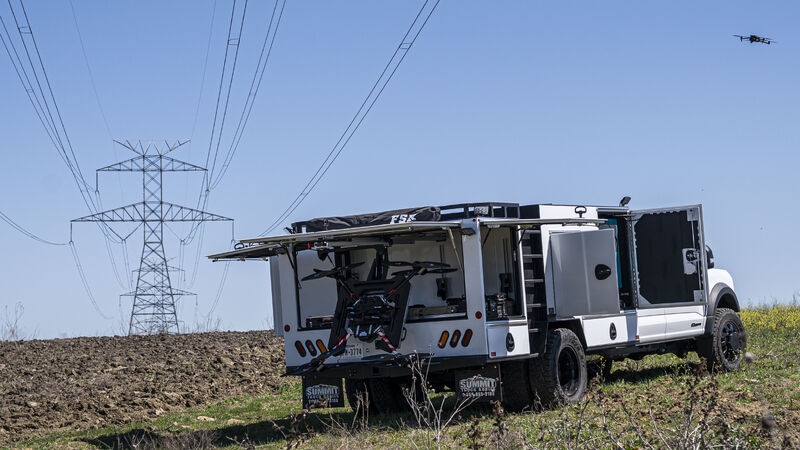
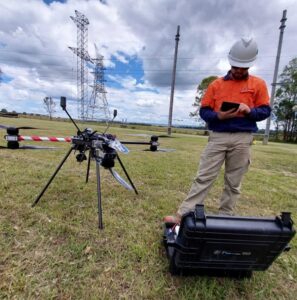
Infravision is betting that the future of transmission line construction looks very different from the past. Their TX system combines autonomous drones, robotic ground equipment and proprietary laying hardware to install high-voltage power lines to reduce dependency on helicopters and large teams of linemen. The goal is to improve speed, safety, and predictability.
 Investors are taking note. In late 2025, the company secured about US$91 million (A$140 million) in Series B funding led by GIC, alongside Hitachi Ventures and other backers. This capital secures global scaling, North American growth and expanded engineering capacity.
Infravision’s presence in Noida, a fast-growing business and technology cluster near New Delhi, places the company at the heart of one of the world’s most dynamic transmission markets. At the same time, field trials with Transgrid, supported by the Australian Renewable Energy Agency, are testing how dynamic line monitoring can enable smarter, real-time grid utilization.
However, all this does not mean “tech instead of field equipment.” For complex stringing operations, Infravision integrates advanced tension stringing systems from ZECK and Zeck TSE. Automation is layered onto proven heavy-duty hardware, not replacing it.
Infravision Drone Vehicle on Youtube: